
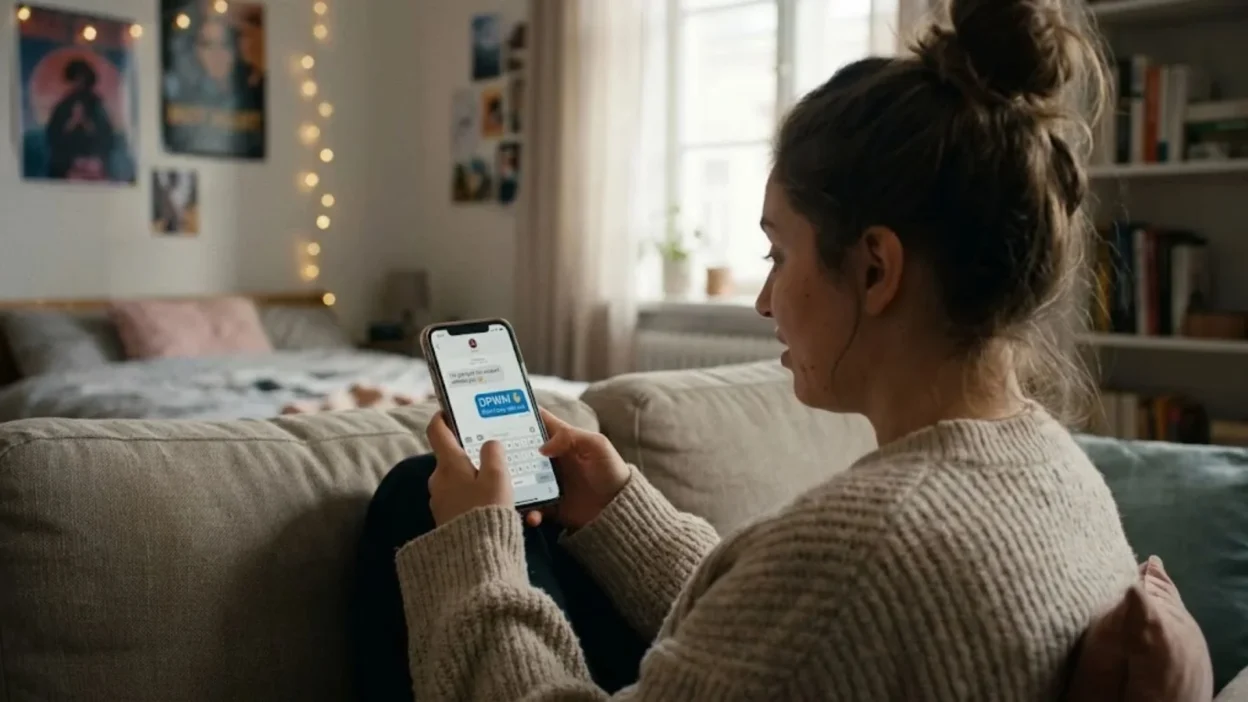
Have you ever received a message containing DPWM and wondered what those four letters mean? You might see it in a text message, Instagram DM, Snapchat conversation, or TikTok comment. Because internet slang changes quickly, understanding every abbreviation can sometimes feel confusing. The good news is that the DPWM meaning in text is usually straightforward once you understand the context.
In casual texting, DPWM commonly stands for Don’t Play With Me. People use this abbreviation when they want someone to stop joking, take them seriously, or stop testing their patience. However, the expression is not always angry. Between friends or romantic partners, it can also communicate playful disbelief, excitement, teasing, or flirtation. 😏
For example, if you tell your crush that you have been thinking about them all day, they might reply, “DPWM 😂” to express playful disbelief. On the other hand, someone who feels ignored or misled might use the same abbreviation to express genuine frustration. Therefore, the surrounding conversation matters just as much as the letters themselves.
In this guide, you will discover what DPWM means, how people use it on social media, how to interpret its tone, and how to respond naturally. You will also learn when the abbreviation is appropriate and why its meaning can change in different situations.
What Does DPWM Mean in Text? 💬
The most common slang meaning of DPWM is Don’t Play With Me. It is an informal abbreviation that people use to communicate seriousness, disbelief, frustration, or playful confidence without typing the entire phrase.
The expression can mean different things depending on the conversation. Sometimes, the sender wants you to stop joking. In other situations, they might simply be reacting dramatically to something surprising or exciting.
Here are a few ways to understand it:
- DPWM = Don’t Play With Me.
- Stop playing with me.
- Don’t joke around with me.
- Be serious with me.
- Don’t test my patience.
- Are you being serious right now? 😂
Example conversation:
- You: I just won two concert tickets!
- Friend: DPWM 😭
- You: I’m serious! Want to come with me?
In this example, the friend is probably expressing surprise rather than anger.
However, DPWM can sound more serious when someone feels that another person is lying, wasting their time, or ignoring their feelings. If the sender uses direct language without playful emojis, it is worth paying attention to the situation before deciding how to respond.
What Does DPWM Stand For? 🔎
DPWM is formed from the first letters of the phrase Don’t Play With Me. Instead of typing all four words, someone can use the abbreviation to communicate the same general idea in a shorter message.
Here is the simple breakdown:
Letter
Word
D
Don’t
P
Play
W
With
M
Me
The full phrase is familiar in everyday English, while DPWM is an informal shorthand used in some digital conversations.
For example, someone might write, “DPWM, are you really moving abroad?” They are probably asking you to stop joking because they cannot believe what they have heard.
Similarly, a person might text, “DPWM, you actually remembered our anniversary? 🥹” In this case, the abbreviation communicates happy surprise.
Keep in mind that DPWM is not as universally recognized as common abbreviations such as LOL or BRB. Consequently, not everyone will immediately understand it. If you are unsure about a particular message, consider the surrounding conversation or ask the sender what they mean.
How Is DPWM Used in Everyday Conversations? 📱
People generally use DPWM when they want to emphasize a reaction. It can make a message sound more expressive, direct, or dramatic without requiring a long explanation.
The meaning often depends on what happened immediately before the abbreviation appeared. A surprising announcement, a joke between friends, and a disagreement can all produce very different interpretations.
Consider these examples:
- Expressing disbelief: DPWM, you got the job already?
- Reacting to a joke: DPWM 😂 You cannot be serious.
- Showing excitement: DPWM, you’re actually coming to see me! 🥹
- Expressing frustration: DPWM. I’ve already explained this twice.
- Questioning a romantic interest: DPWM, you really like me? 👀
Notice how the same abbreviation fits several situations. It does not automatically mean that the sender is angry or trying to start an argument.
Before replying, think about your relationship with the person, their usual communication style, and the topic being discussed. These details can help you interpret their intention more accurately.
What Does DPWM Mean on Snapchat? 👻
On Snapchat, DPWM can mean Don’t Play With Me when someone uses it in a casual chat or private message. The abbreviation may appear during a conversation about plans, relationships, jokes, or unexpected news.
Because Snapchat conversations are often quick and informal, people may use short expressions to react without writing a complete sentence.
For example:
- Your friend: I saw your crush at the mall today.
- You: DPWM 😭 What were they doing there?
- Your friend: I’m telling you the truth!
Here, DPWM communicates surprise and a desire to confirm the information.
It can also appear in a playful exchange with someone you like. If your crush makes a bold statement and you reply with “DPWM 😏,” you might be asking whether they really mean what they said.
Nevertheless, the abbreviation does not have a special, universally defined Snapchat meaning. Its interpretation depends on the people involved and the conversation. If someone sends only “DPWM” without additional context, asking a friendly follow-up question is often the simplest solution.
What Does DPWM Mean on Instagram? 📸
On Instagram, DPWM can appear in direct messages, comments, Stories, and casual exchanges between friends. Its most common slang interpretation remains Don’t Play With Me.
The tone can change depending on how someone uses it. In a comment, it might express surprise at an impressive photo or unbelievable announcement. In a private message, it might communicate playful teasing or a more serious reaction.
Here are some examples:
- Someone posts a surprising announcement: “DPWM 😭 Is this actually happening?”
- Your friend shares a funny Story: “DPWM 😂 You’re too much.”
- Your crush sends a compliment: “DPWM, you really think that? 🥰”
- Someone makes an unexpected promise: “DPWM. Are you being serious?”
Instagram also encourages short, expressive replies, so abbreviations can help people react quickly.
However, avoid assuming that every comment has a romantic meaning. A playful response can simply reflect friendship, humor, or surprise. Read the complete exchange before interpreting DPWM as flirting or irritation.
What Does DPWM Mean on TikTok? 🎬
On TikTok, DPWM may be used in comments, captions, and conversations about funny videos, relationship situations, personal achievements, or surprising claims.
The abbreviation can help communicate a strong reaction in just a few characters. For example, if someone shares an unbelievable story, a viewer might comment, “DPWM 😂” to express disbelief.
Here are some possible examples:
- “DPWM, you did that without practicing? 😭”
- “DPWM, this video is actually hilarious.”
- “DPWM, they really got back together? 👀”
- “DPWM 😂 I refuse to believe this happened.”
In these examples, the abbreviation adds emotional emphasis rather than introducing a new meaning.
TikTok slang also varies across communities, so not every viewer will interpret the letters in exactly the same way. Some users may understand the expression immediately, while others might need the full phrase explained.
If you see DPWM in a video about relationships, jokes, or everyday drama, Don’t Play With Me is a reasonable first interpretation. If it appears in a technical discussion or another specialized setting, however, the context may point to a different meaning.
Is DPWM Flirty or Romantic? ❤️
DPWM can sound flirty or romantic when two people already share a playful connection. In these conversations, the phrase may express surprise at a compliment, disbelief about someone’s feelings, or excitement about a possible date.
For example, imagine that your crush texts, “I think you’re cute.” You might reply, “DPWM 😳 Are you serious?” Your response communicates surprise while inviting the other person to confirm their feelings.
Here are a few situations where DPWM might have a flirty tone:
- Someone compliments your appearance, and you playfully question whether they mean it.
- Your crush suggests meeting for coffee, and you respond with excited disbelief.
- A romantic partner makes a sweet promise, and you react with affectionate teasing.
- Someone playfully challenges you during a conversation about attraction.
Example conversation:
- Them: I would definitely take you on a date.
- You: DPWM 😏 When are we going?
In this exchange, the reply sounds interested and playful.
However, DPWM is not inherently romantic. It can communicate frustration, surprise, or ordinary disbelief just as easily. Look for additional signs of mutual interest rather than treating the abbreviation alone as proof that someone likes you.
Can DPWM Sound Rude or Aggressive? ⚠️
Yes, DPWM can sound confrontational when someone uses it during a disagreement or a conversation involving trust, honesty, or personal boundaries.
The full phrase Don’t Play With Me can be a firm request to stop joking around. Depending on the situation, it can also suggest that the sender feels disrespected or is running out of patience.
Compare these examples:
- Playful: “DPWM 😂 You really ate the whole pizza?”
- Surprised: “DPWM! You got engaged?”
- Frustrated: “DPWM. I told you I was serious.”
- Firm: “DPWM about my feelings. I’m not joking.”
The first two examples sound lighthearted because the context suggests humor or excitement. The final two communicate a stronger emotional message.
If someone sends DPWM during a tense conversation, avoid immediately responding with sarcasm. Instead, acknowledge what they are saying and ask for clarification if necessary.
For example, you could reply, “I understand you’re serious. Can you explain what upset you?” This approach helps prevent a misunderstanding from turning into a bigger argument.
Remember that an abbreviation cannot fully communicate facial expressions, vocal tone, or body language. When the meaning is unclear, a calm response is usually more helpful than making assumptions.
How to Reply When Someone Texts DPWM 💌
Your best response depends on the sender’s tone and the subject of the conversation. If the message is playful, you can respond with humor. If the person sounds serious, acknowledge their feelings instead of treating the abbreviation as a joke.
Here are some natural replies for different situations.
If they sound playful:
- I’m being serious this time 😂
- Why would I lie to you?
- You caught me! 😭
- I promise I’m not joking.
- Believe it or not, it’s true!
If they sound surprised:
- Yes, really! 😄
- I know, even I can’t believe it.
- You heard me right!
- I’m telling you the truth.
- Want me to prove it? 👀
If they sound flirty:
- Maybe you should find out yourself. 😉
- I’m serious, so what’s your answer?
- Why would I play with your heart? ❤️
- Guess you’ll have to trust me.
- You look cute when you’re surprised.
If they sound upset:
- I’m sorry if I made it seem that way.
- I understand you’re serious.
- Let me explain what I meant.
- I wasn’t trying to disrespect you.
- Can we talk about what happened?
Choose a reply that matches your relationship and the actual conversation. A funny response may work well with a close friend, while a thoughtful message is more appropriate when someone feels hurt.
DPWM Meaning in a Relationship 💕
In a relationship, DPWM can communicate several emotions, including affection, disbelief, frustration, and a desire for honesty. The phrase itself does not tell you which emotion is present, so you need to consider what your partner said before using the abbreviation to interpret their feelings.
For example, a partner might text, “DPWM, you planned all this for me? 🥹” after discovering a thoughtful surprise. Here, the expression communicates happy disbelief.
On the other hand, someone might say, “DPWM about being faithful. I need honesty.” In this situation, the phrase expresses a serious boundary rather than romantic playfulness.
You can usually understand the difference by examining three things:
- The topic: Is the conversation about a surprise, a joke, or a serious concern?
- The tone: Are there playful emojis, affectionate words, or signs of frustration?
- The relationship: Do you normally tease each other, or has something happened that requires an honest conversation?
If your partner uses DPWM during a disagreement, give them a chance to explain what they mean. Avoid assuming that they are being dramatic or trying to control the conversation simply because they used slang.
Clear communication matters more than decoding four letters perfectly. When emotions are involved, asking a respectful question can prevent unnecessary confusion.
DPWM vs. Similar Texting Slang 🤔
DPWM belongs to the broader category of informal expressions used to communicate reactions, disbelief, and boundaries. However, it is not interchangeable with every abbreviation that sounds similar.
The following comparison can help you choose the right interpretation.
Slang
Meaning
Common use
DPWM
Don’t Play With Me
Asking someone to stop joking or take something seriously
FR
For Real
Confirming something is genuine or asking if it is true
NGL
Not Gonna Lie
Introducing an honest opinion
ISTG
I Swear to God
Emphasizing a claim or strong emotion
LOL
Laughing Out Loud
Showing amusement or softening a message
SMH
Shaking My Head
Expressing disappointment or disbelief
WYD
What You Doing?
Asking what someone is doing
For instance, if your friend tells you something unbelievable, you might ask, “FR?” to check whether it is true. If you respond with “DPWM,” you may be expressing stronger disbelief or asking the person not to joke around.
Similarly, LOL generally signals amusement, while DPWM can carry a more serious or confrontational tone.
Understanding these differences makes it easier to interpret messages naturally without confusing one abbreviation with another.
When Should You Use DPWM? ✨
DPWM is best suited to casual communication with people who understand your texting style. It can work well in private messages, group chats, playful exchanges, and informal social media conversations.
Before using it, consider whether the other person will understand the abbreviation and whether its tone suits the situation.
Good situations for DPWM include:
- Reacting to a surprising announcement from a friend.
- Playfully questioning an unbelievable story.
- Responding to a bold compliment from someone you know well.
- Expressing disbelief during a funny conversation.
- Asking someone to take a statement seriously when the relationship allows informal language.
However, avoid using DPWM as your first response to a sensitive conversation if you are unsure how it will sound. The phrase can come across as dismissive or aggressive when someone is discussing an important personal issue.
It is also unsuitable for most formal emails, professional reports, and workplace messages where clear, direct language is expected.
Instead of writing “DPWM” in a serious professional exchange, explain exactly what you mean. For example, write, “Could you clarify whether this information is correct?” or “I want to make sure we’re discussing this seriously.”
The goal is not to avoid slang altogether. Rather, use it when it helps the conversation instead of making your intentions harder to understand.
Other Possible Meanings of DPWM 🔧
Although Don’t Play With Me is a common interpretation in casual texting, DPWM can also refer to technical terminology in specialized fields.
One example is Digital Pulse Width Modulation, a term associated with digital electronics and power-control techniques. Pulse-width modulation involves controlling the proportion of time a signal remains active during a repeating cycle. Depending on the circuit or system, this technique can help regulate power delivery or control electronic components.
Therefore, the context in which you encounter DPWM is essential.
If you see the abbreviation in a message from a friend, a romantic conversation, or a social media comment, the slang interpretation may make sense. However, if you encounter it in an engineering paper, technical manual, or electronics discussion, it may refer to a specialized concept instead.
Technical abbreviations can also have different expansions across industries and research communities. Consequently, it is better to check the document or field-specific source than assume every technical use refers to the same thing.
For everyday texting, though, Don’t Play With Me is the main interpretation to consider first when the surrounding conversation supports it.
Common Mistakes to Avoid When Interpreting DPWM 🚫
Short abbreviations are easy to misunderstand because they leave out the tone and detail that would normally accompany a spoken conversation. DPWM is no exception.
Avoid these common mistakes when you encounter it.
1. Assuming the sender is angry. DPWM can sound firm, but it may also express excitement, playful disbelief, or affectionate teasing.
2. Treating it as a romantic signal. Someone using DPWM does not automatically mean they are flirting. Look at the rest of the conversation before drawing conclusions.
3. Ignoring emojis and punctuation. A message such as “DPWM 😂” may sound very different from “DPWM.” Emojis provide clues, although they cannot guarantee the sender’s intention.
4. Assuming everyone knows the abbreviation. DPWM is informal slang, and some people may not recognize it. If you use it with someone unfamiliar with internet shorthand, they may need clarification.
5. Ignoring the subject of the conversation. An abbreviation used in a relationship discussion may have a different emotional meaning from one found in an engineering document.
6. Responding defensively too quickly. If the message seems serious, ask what the person means instead of immediately arguing or making a joke.
A little attention to context can prevent many unnecessary misunderstandings. When the letters alone do not provide a clear answer, asking the sender is perfectly reasonable.
Frequently Asked Questions About DPWM ❓
1. What does DPWM mean in text?
DPWM commonly stands for Don’t Play With Me. It is an informal abbreviation used to express disbelief, frustration, playful teasing, or a request for someone to be serious.
2. What does DPWM mean from a girl?
When a girl texts DPWM, she may be expressing surprise, teasing you, questioning whether you are serious, or communicating frustration. The meaning depends on your conversation and relationship. It does not automatically mean she is flirting.
3. What does DPWM mean from a guy?
When a guy uses DPWM, he may be telling you to stop joking, expressing disbelief, or reacting playfully to something you said. Check the context before assuming he is angry or interested romantically.
4. Does DPWM mean Don’t Play With Me?
Yes. In casual texting, Don’t Play With Me is the common slang expansion of DPWM. The phrase can be playful or serious, depending on the circumstances.
5. Is DPWM rude?
Not necessarily. DPWM can sound friendly or humorous between people who understand each other’s style. However, it may sound confrontational during an argument or when someone feels disrespected.
6. What does DPWM mean on Snapchat?
On Snapchat, DPWM commonly means Don’t Play With Me. People may use it in private messages to express surprise, disbelief, teasing, or frustration. 👻
7. How should I reply when someone says DPWM?
Choose your reply according to the tone. You could say, “I’m being serious 😂” during a playful conversation or “I understand. Let me explain” if the sender seems upset.
8. Does DPWM have a different meaning outside texting?
Yes. In technical contexts, DPWM can refer to Digital Pulse Width Modulation. The correct interpretation depends on whether the abbreviation appears in casual messaging or specialized technical material.
Conclusion
The most common DPWM meaning in text is Don’t Play With Me. 💬 People use this informal abbreviation to express disbelief, playful teasing, frustration, or a desire for someone to take them seriously.
You may encounter it in text messages, Snapchat chats, Instagram DMs, TikTok comments, and conversations with friends or romantic partners. However, its exact tone depends on the situation. A laughing emoji may suggest a joke, while a serious discussion may give the same abbreviation a firmer meaning.
The easiest way to understand DPWM is to read the complete message, consider your relationship with the sender, and pay attention to the surrounding conversation. If you are still unsure, ask what they mean rather than guessing.
Once you understand these differences, you can recognize DPWM more confidently and respond in a way that keeps your conversations clear, natural, and enjoyable. ❤️

Dylan Foster is a relationship content writer and communication enthusiast with a passion for helping people build confidence in dating and social interactions. He specializes in pickup lines, flirty texts, conversation starters, and modern relationship advice.